Madeira Tourist Information
All the information you need to plan and prepare your holiday.
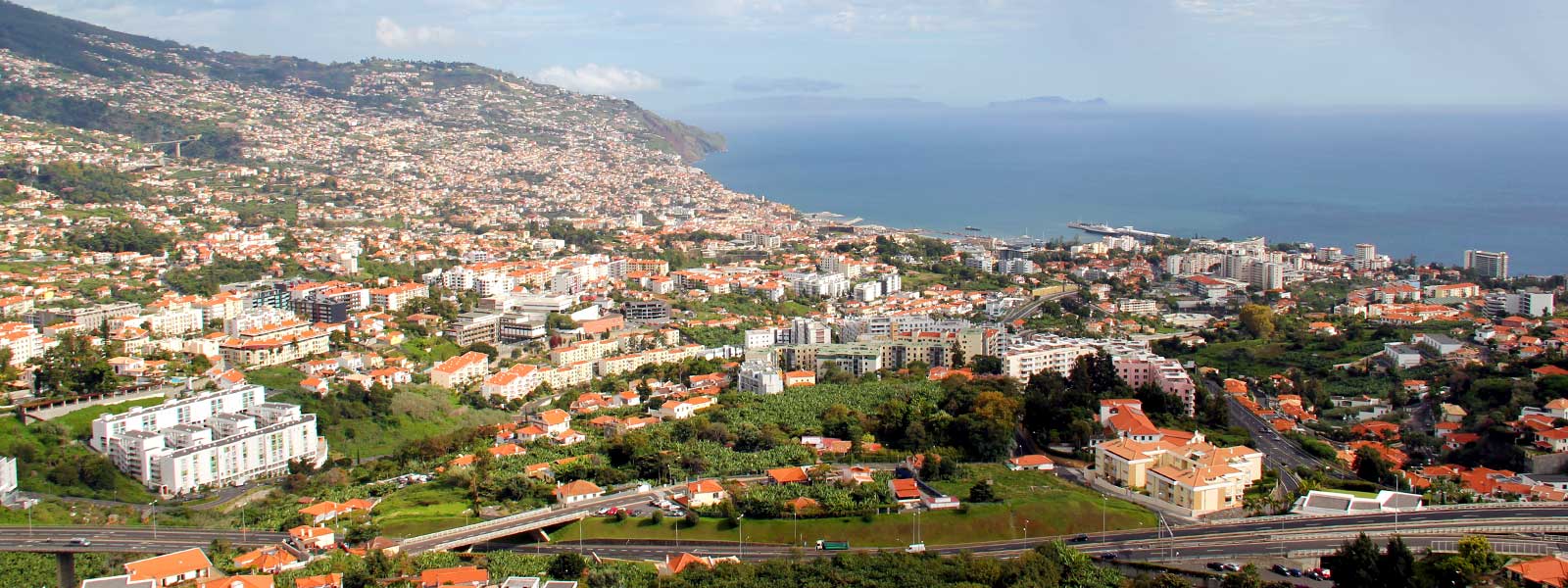
History: Madeira was re-discovered by Portuguese sailors in the service of Infante D. Henrique (Henry the Navigator) in 1419, and settled after 1420. The archipelago is considered to be the first territorial discovery of the exploratory period of the Portuguese Age of Discovery. In 23 September 1433, the name Ilha da Madeira (English: Madeira Island, or literally island of wood) began to appear in the first documents and maps. The name given to the islands corresponded to the large dense forests of native laurisilva trees that populated the island during the settlement. Today, it is a popular year-round resort, being visited every year by about one million tourists, noted for its Madeira wine, flowers, landscapes and embroidery artisans, as well for its annual New Years celebrations that feature the largest fireworks show in the world, as officially recognized by the Guinness World Records, in 2006. The main harbour in Funchal is the leading Portuguese port in cruise liner dockings, being an important stopover for commercial and trans-Atlantic passenger cruises between Europe, the Caribbean and North America.
Climate: These islands, because of their privileged geographical position and mountainous relief, have a surprisingly mild climate. Very mild average temperatures, 22ºC in the summer and 16ºC in the winter, and a moderate level of humidity, confer upon these islands exceptional subtropical features. The seawater temperature is also very mild, because of the influence of the warm Gulf current, presenting averages of 22ºC in the summer and 18º in the winter.
Ecosystem: In the south, there is very little left of the indigenous laurisilva subtropical rainforest which once covered the whole island (the original settlers set fire to the island to clear the land for farming) and gave it the name it now bears (Madeira means "wood" in Portuguese). However, in the north, the valleys contain native trees of fine growth. These laurisilva forests, notably the forests on the northern slopes of Madeira Island, are designated a World Heritage Site by UNESCO. Madeira has three endemic bird species: Zino's Petrel, the Trocaz Pigeon and the Madeira Firecrest, while the Madeiran Chaffinch is an endemic subspecies. It is also important for breeding seabirds, including the Madeiran Storm-petrel, North Atlantic Little Shearwater and Cory's Shearwater. Madeira also has many endemic species of fauna – mostly invertebrates which include the extremely rare Madeiran Large White but also some vertebrates such as the native bat, some lizards species, and some birds as already mentioned. The biggest tarantula of Europe is found on Desertas islands of Madeira and can be as wide as a man's hand. These islands have more than 250 species of land molluscs (snails and slugs), some with very unusual shell shape and colours, most of which are endemic and vulnerable.
Levadas: The island of Madeira is wet in the northwest but dry in the southeast. In the 16th century the Portuguese started building levadas or aqueducts to carry water to the agricultural regions in the south. The most recent were built in the 1940s. Madeira is very mountainous, and building the levadas was difficult and often sentenced criminals or slaves were used. Many are cut into the sides of mountains, and it was also necessary to dig 25 miles (40 km) of tunnels, some of which are still accessible.Today the levadas not only supply water to the southern parts of the island but provide hydro-electric power. There are over 1,350 miles (2,170 km) of levadas and they provide a remarkable network of walking paths. Some provide easy and relaxing walks through beautiful countryside, but others are narrow, crumbling ledges where a slip could result in serious injury or death.
Transport: The Islands have two airports, Funchal Airport on the Island of Madeira and the other in the island of Porto Santo. Flights to the islands are mostly made from Lisbon and Porto, but there are also direct flights from other major European cities and other countries, like Brazil, Venezuela, and South Africa.Transport between the two main islands is by plane or ferries "Lobo Marinho", the latter also carrying vehicles. Visiting the interior of the islands is now easy thanks to construction of the Vias Rápidas, major roads built during Portugal's economic boom. Modern roads reach all points of interest on the islands. The old, curving mountain roads are still an excellent way to tour the island.
Travel Documents: Visitors from the European Union, members of the Shengen Treaty, are granted unrestricted entry. A passport with at least 6 months validity is recommended. If you hold a passport other than those issued by member states mentioned above, a visit Portugal visa may be required. Please check you hold valid documents for entry to Madeira. Air Travel Corporation will not accept any liability for passengers holding incorrect entry documentation for Madeira.
VACCINATIONS: not required at present - please check with your doctors' surgery for any updates to this.
Customs Formalities: Products leaving the island are not subject to any limitation. However, if a quantity is considered excessive, the customs officers might require a document proving that the articles are for personal use.
Gastronomy: Madeira Island offers a range of dining options as diverse as the restaurants themselves. Elegant old manor houses transformed into restaurants, typical restaurants with a rustic decor, and popular unpretentious eating places with local colour, all contribute to your experience. On offer is a variety of vegetable soups, freshly caught fish from the Atlantic including the immensely popular black scabbard fish "Espada", tuna, parrot fish and so on. Meat specialties include the famous "Espetada", which is beef on a skewer, and the "Carne de vinho e d'alhos", a dish of pork marinated in wine and garlic. Desserts: Egg paste pastries, tropical fruits such as bananas, guavas, passion fruit, Chinese cherries, figs, etc., all accompanied by local aperitifs like the "Poncha", local or Portuguese mainland table wine, and a variety of local digestives such as dry or rich Madeira wine, and sugar-cane alcohols.
Sports: Sea lovers will benefit from the warm sea currents, with temperatures ranging between 19º and 24ºC, ideal for snorkelling, diving, sailing, surfing, windsurfing and sport fishing, all year round. You will also be able to catch the best waves in Europe, at the Jardim do Mar, Fajã da Areia (São Vicente) and Porto da Cruz beaches. Paragliding or hang-gliding over the island, canyoning to discover the heart of the mountains, climbing the highest peaks, embarking on an all-terrain adventure, feeling the adrenaline rush while riding a jet-ski, or simply enjoying the sheer freedom of kitesurfing, are some of the sporting experiences available to visitors. Golf, trekking and hiking are excellent alternatives for those preferring calmer activities, allowing a closer look at the natural features of these lusciously green islands. Discover the impressive and diverse island vegetation over a walk along one of the local canals known as “levadas” or one of the many trails at the heart of the Laurissilva forest, declared by UNESCO as a World Heritage Nature Site. Due to its beauty and diverse landscape, this forest has recently been declared one of the Seven Natural Wonders of Portugal.
Artesans: In addition to the traditional local craft products, Portuguese shoes, flowers and tropical fruits are favoured purchases on any visit. Our famous Madeira wine deserves special attention. Wickerwork, tapestry and the renowned Madeira embroidery should also find a place in the departing holidaymakers’ baggage. On the streets of Funchal, one can find shops selling the brands of internationally famous fashion designers.
Shops: are open from 9:00 to 13:00hrs and from 15:00 to 19:00hrs, Monday to Friday. On Saturday from 9:00 to 13:00hrs. Some shopping centres are open from 10:00 to 22:00hrs every day. Major Credit cards accepted in hotels, restaurants and shops.
IT: The region has very well developed in terms of IT networks and telephone communications. The international access code is +351, and the regional area code is 291.
Banks: are open from 8:30 to 15:00hrs, Monday to Friday. Foreign Exchange offices work from 9:00 to 13:00hrs and from 14:00 to 19:00hrs, every day, except on Saturdays when they open from 9:00 to 19:00hrs. Outside these periods, the hotels can make currency exchange.
Language: Portuguese
Population: 255 000 people live on these islands according to data collected in 2001. Half of the population lives in the capital. Population density is very high, reaching 337 inhabitants/sq km in Madeira and 112 per sq km in Porto Santo.
Currency: € EURO
Time: Madeira follows Portuguese time with Summer time. Clocks advance one hour in the last Sunday of March and go back one hour in the last Sunday of October, according to the regulations of the European Union.
Electricity: The electric current is 220 volts.
Water: There is plenty of water of an excellent drinking standard. Porto Santo uses treated seawater, but all of it can be consumed.
Post: The main post office, or "Correios de Portugal", is at the centre of Funchal, at the Avenida Calouste Gulbenkian. There are daily collections at 11:00 and 15:00 from the post boxes placed all over the island.
Chemists: Chemists are open from Monday to Friday from 9:00 to 13:00 and from 15:00 to 19:00, on Saturdays from 9:00 to 13:00. In addition, at the door of every pharmacy you will find advisory notes about the pharmacies currently open. There will usually always be one pharmacy open in Funchal regardlesss of the hour or day.
Hospital Centres: There are 67 health centres situated around the Madeira island, and one at Porto Santo. In Funchal there are two hospitals.
Police: The police presence is very discreet. If you need help, dial 112. There is a Lost Property section in Funchal, at Rua da Infância, 28, Tel.: 291 208200
Safety: Madeira is one of the safest holiday destinations in the world. If you take the minimum sensible precautions, you probably won’t experience any problems. Most of the hotels have safes or deposit boxes where you can keep your valuables.
Tips: In hotels and restaurants the bill normally includes service. The normal rate for good service is 10%.
Camping Parks: There are two official camping sites on the Madeira archipelago, one in Porto Moniz and the other in Porto Santo, in the town of Vila Baleira.
National Holidays
1st January New Years’ Day
25th April Freedom Day
1st May May Day
10th June Day of Camões and Portugal
15th August Our Lady Assumption
5th October Republic Day
1st November All Saints Day
1st December Restoration of Independence Day
25 December Christmas Day
*On the 1st of July the Autonomous Region of Madeira celebrates its holiday. Religious festivities, with variable dates, are also celebrated in the Islands.
Museums Funchal
Contemporâry Art Museum
Mon-Fri: 10h - 12h30 and 14h - 17h30
closed on Bank Holidays
São Tiago Fort. Collection of Portuguese Contemporâry Art
Religious Art Museum
Tue-Fri: 10h - 12h30 and 14h - 18h00
Rua do Bispo
Religious art and sculpture XVI – XVIII century
City Museum
Mon-Fri: 10h - 12h30 and 14h - 17h30
Town Hall. Covers 500 years life in the city of Funchal
Museum Casa Frederico de Freitas
Tue-Fri: 10h - 12h30 and 14h - 18h00
Sunday 10h - 12h30
Closed on Bank Holidays
Calçada de Santa Clara
Exhibitions includes hand painted tiles, objects of religious art, furniture and ceramics
Museum Quinta das Cruzes
Tue-Fri: 10h - 12h30 and 14h - 17h30
Sunday 10h - 13h
Closed on Bank Holidays
Calçada do Pico
Portuguese and Foreign furniture XVI a XIX century. Portuguese porcelain XVII – XIX century
Funchal Municipal Natural History Museum
Tue-Fri: 10h - 18h
Sat, Sun Holidays 12h - 18h
Rua da Mouraria
Fauna, flora e geology of the Archipelago of Madeira. Also an aquarium, Municipal library and regional archives
Wine Museum
Mon-Fri: 9h30 -12h30 and 14h - 17h
Closed on Bank Holidays
Rua 5 de Outubro
Everything covering the history of Madeira wine
Madeira Wine Museum
Mon-Fri: 9h - 19h
Sat: 9h - 14h
Avenida Arriaga
The oldest Madeira wine cellars
Electricity Museum
Tue-Sat: 10h - 12h30 and 14h - 18h
Closed on Bank Holidays
Rua da Casa da Luz
Rare machinery and equipment relating to electricity
Museums Ribeira Brava
Ethnographic Museum
Tue-Sat: 10h - 12h30 and 14h - 18h
Closed on Bank Holidays
Rua de S. Francisco
Themed exhbits on the Madeiran way of life
Museums Machico
Whale Museum
Tues- Sun: 10h - 12h and 13h - 18h
Caniçal fishing village
Exhibits and artefacts related to whaling
TOURISM OFFICES
The Madeira Tourist Board has eight tourist offices. Two of them are in Funchal and five in other parts of Madeira and one in Porto Santo. Madeira Tourism Board also has two tourist information desk offices, one in Curral das Freiras and another one in Lisbon.
Source : Wikipedia / Madeira Tourism


Engineered by: